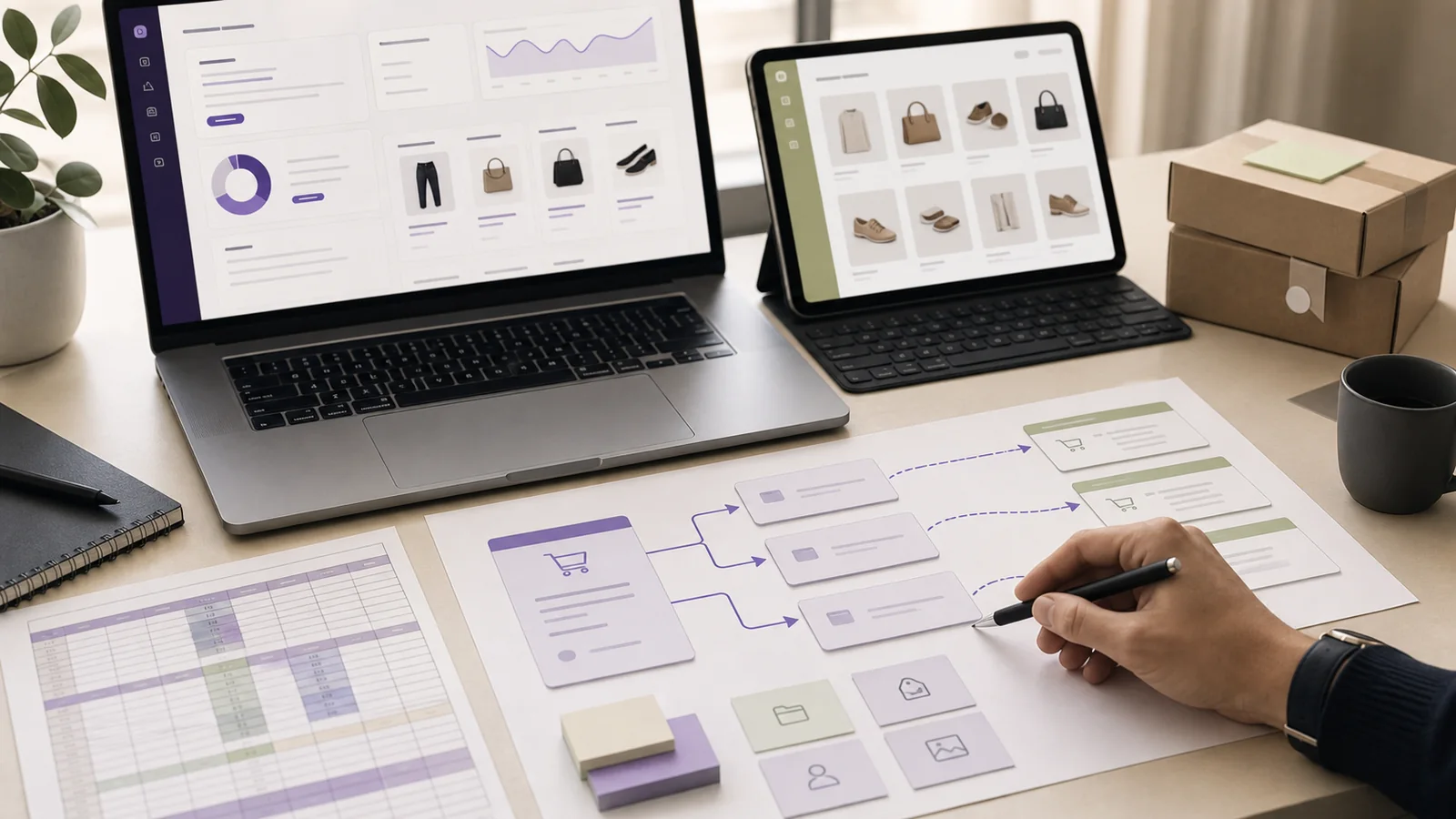
B2B E-commerce in 2026: Professional Buyers Now Expect DTC Standards
67% of B2B buyers prefer to purchase without a sales rep. That figure rose six points in under a year. Digital is no longer a secondary channel.
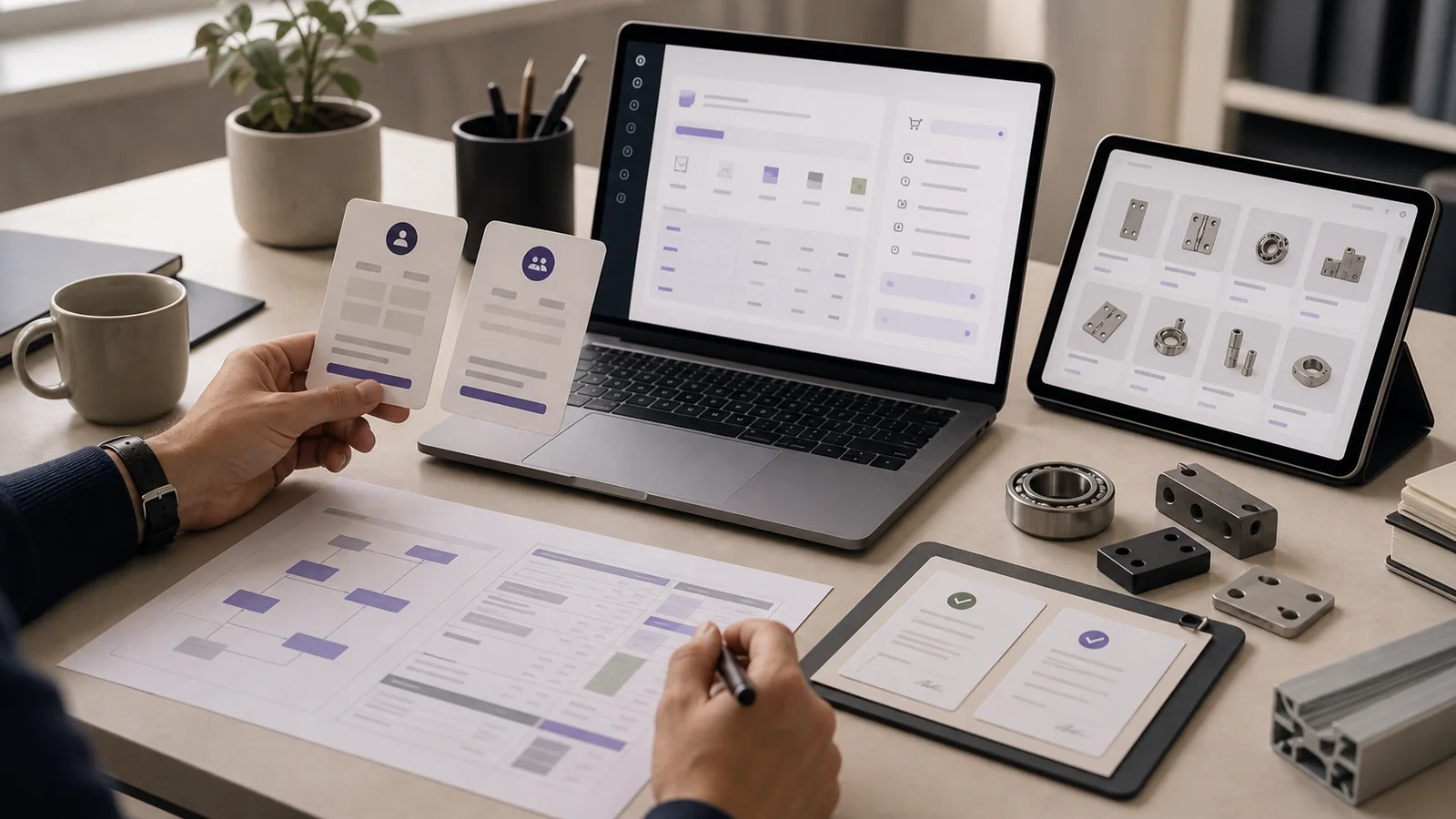
B2B e-commerce is no longer an IT topic reserved for large enterprises. In March 2026, Gartner reported that 67% of B2B buyers prefer to purchase without a sales rep, up from 61% in June 2025. Six points in under a year. What those buyers experience as consumers, clear pricing, visible offers, checkout in a few clicks, real-time order tracking, has become the baseline expectation on the professional channel.
A market growing faster than expected
The global B2B e-commerce market is projected to reach $36 trillion by end of 2026, with a compound annual growth rate of 14.5%. Revenue from digital channels is expected to account for 56% of total B2B organizational revenue in 2025, compared to 32% in 2020. In France, the overall e-commerce market approached 200 billion euros in 2025 according to Fevad, with B2B driving a growing share of that growth.
The most striking data point comes from McKinsey: 71% of B2B buyers say they are comfortable closing transactions above $50,000 through self-service channels, and 27% would consider transactions above $500,000 with no direct sales contact. The assumption that high-value transactions require a long human sales cycle is becoming outdated. For technical background on platform capabilities, see the migration to Shopify Plus analysis.
What B2B buyers expect, and what most B2B sites deliver
The gap between B2B buyer expectations and what most professional sites offer remains significant. Forrester estimates that more than half of large B2B transactions will be handled through self-serve channels by 2025. Yet many B2B sites still require a quote request form, manual account validation, or offer no online pricing at all. See case studies from companies that have closed that gap.
| B2B buyer expectation (DTC standard) | Median B2B site reality | Impact |
|---|---|---|
| Visible pricing without login | Hidden prices, contact form | Drop-off during discovery |
| Checkout in 3 steps or fewer | Lengthy account creation | Low completion rate |
| Search with filters and autocomplete | Static catalog or basic search engine | Longer purchase cycle |
| Deferred payment terms (net 30/60) at checkout | Manual off-site negotiation | Friction for new customers |
| Real-time order tracking | Single confirmation email | Post-purchase dissatisfaction |
| One-click reorder | No account history | Loss of repeat business |
The role of millennials in this shift
The acceleration is not only technological, it is demographic. Millennials now make up the majority of decision-makers and influencers in B2B purchasing. This generation grew up with mobile-first interfaces and has no tolerance for PDF catalogs, 48-hour account validation delays, or the absence of instant responses. For them, a B2B site that does not meet DTC standards signals internal disorganization.
B2B conversion rates: benchmarks in context
The average conversion rate in B2B e-commerce ranges from 1.8% to 3.0% according to Elogic Commerce, with top performers exceeding 5%. These figures are below DTC benchmarks (2.5% to 4.0%) but reflect the complexity of the purchase cycle: multiple decision-makers, internal approval, contractual conditions.
The real performance metric in B2B is not the raw conversion rate: it is average order value, reorder frequency, and 12-month retention. A custom e-commerce site converting at 2.5% with an average order of 3,000 euros and automated monthly reorders is more profitable than a DTC site at 4% with a 60-euro average basket.
Features that matter in 2026
- Company accounts with user and permission management (approver, buyer, read-only)
- Account-specific or segment-specific price lists, applied automatically at login
- Deferred payment terms (net 30, net 60) built into checkout
- Quick order by SKU or CSV import for reorders
- Conditional catalog based on customer profile, powered by solid product data at the source
- Real-time ERP and OMS integration for inventory, pricing, and order status
- Self-serve portal: invoices, purchase orders, order history, and returns with no human contact
Where to start: three priorities for a mid-size company
- Audit the purchase journey from the customer's perspective: simulate a first order as a new professional customer and note every point of friction
- Identify the three main reasons for abandonment (analytics and customer input) and address them before investing in new features
- Test visible pricing and self-serve on a limited segment before a full rollout: internal resistance is often greater than the market resistance. Discuss your project with our team to define the right scope.
What is the difference between a B2B e-commerce site and a DTC site?
A DTC site serves consumers with low average baskets and short purchase cycles. A B2B site manages company accounts, account-specific price lists, deferred payment terms, and approval workflows. The 2026 trend is that B2B buyers expect DTC-level fluidity combined with professional features (user permissions, CSV reorder, online payment terms).
Is Shopify Plus a good fit for B2B in 2026?
Yes, for most mid-market use cases. Native Shopify Plus B2B covers company accounts, per-customer price lists, payment terms, custom checkout, and conditional catalogs. Limitations apply to complex product configurators and certain ERP integrations, which can be addressed through third-party apps or custom development via the Admin API.
How do you measure B2B e-commerce performance?
Key metrics are conversion rate (1.8% to 3% on average), average order value, 90-day reorder rate, and new account activation rate. Self-serve portal utilization is also a maturity indicator: the higher it is, the lower the per-order processing cost for the internal team.
Sources
More on this topic at Smartshift
A b2b e-commerce project to scope?
Send the URL and your goal. We tell you which project to start with, without selling a rebuild you do not need.
Get advice on my project